




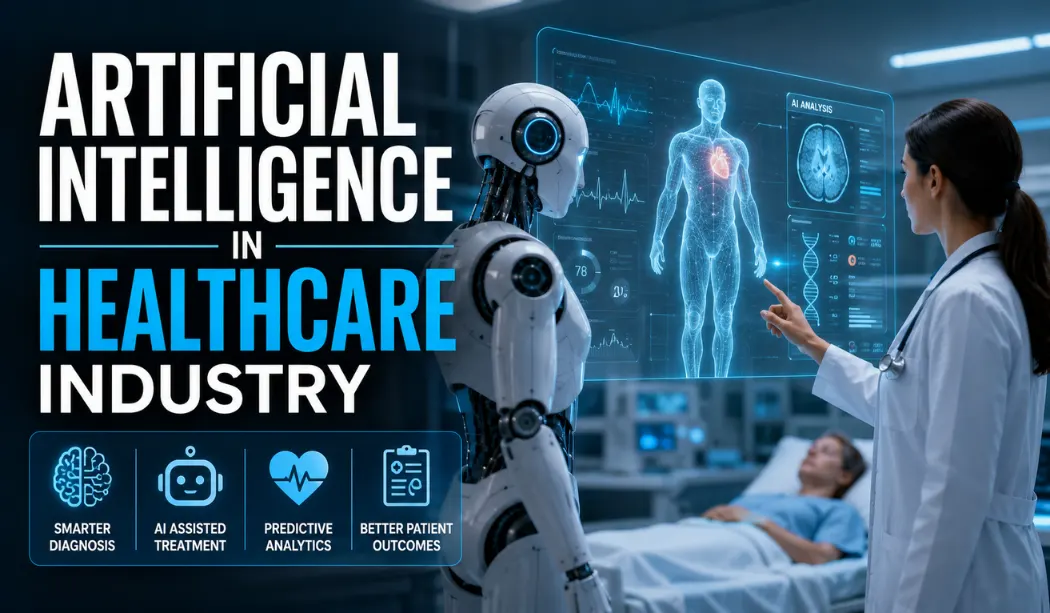
Imagine entering the hospital, where computers assist doctors identify a disease before it gets risky. This is like something out of a movie and is actually taking place today. The world of medicine is evolving quickly due to the latest healthcare innovation technology. The most significant change is due to an extremely powerful instrument Artificial Intelligence In Healthcare Industry installations across the world. From analyzing X-rays, to monitoring an individual's heartbeat, the latest software has helped people lead better lives. We'll look at how digital brains are changing hospitals, saving lives each everyday.
What is the Role of AI in Healthcare Industry?
The uses of AI for healthcare settings are expanding rapidly. Imagine AI as a powerful aid that is never idle. AI can scan through billions of medical records within a few seconds to spot patterns that the human eye could overlook.
AI assists doctors in determining why a patient has become sick. AI also recommends the most effective treatment based upon what's been successful for thousands of individuals. In the process of handling a lot of paperwork AI lets doctors who are human than enough time to sit to talk and be attentive to their patients.
Why is AI Important in Healthcare?
The amount of medical data is growing each day. There are so many reports, graphs and other notes for the busy medical staff to read on their own. This is the reason why AI crucial in the field of healthcare? It takes massive quantities of data that is messy and decodes the information instantly.
Clinics with the latest technology will be able to identify cancerous diseases sooner than they did they did before. The earlier detection means easier treatments and higher survival rates. This has a huge positive effect of AI on the outcomes of healthcare which means that less errors occur when patients need assistance most.
Read also: Artificial Intelligence For Data Analysis: The Ultimate 2026 Guide
The Ultimate List: Top 10 Artificial Intelligence In Healthcare Industry Uses
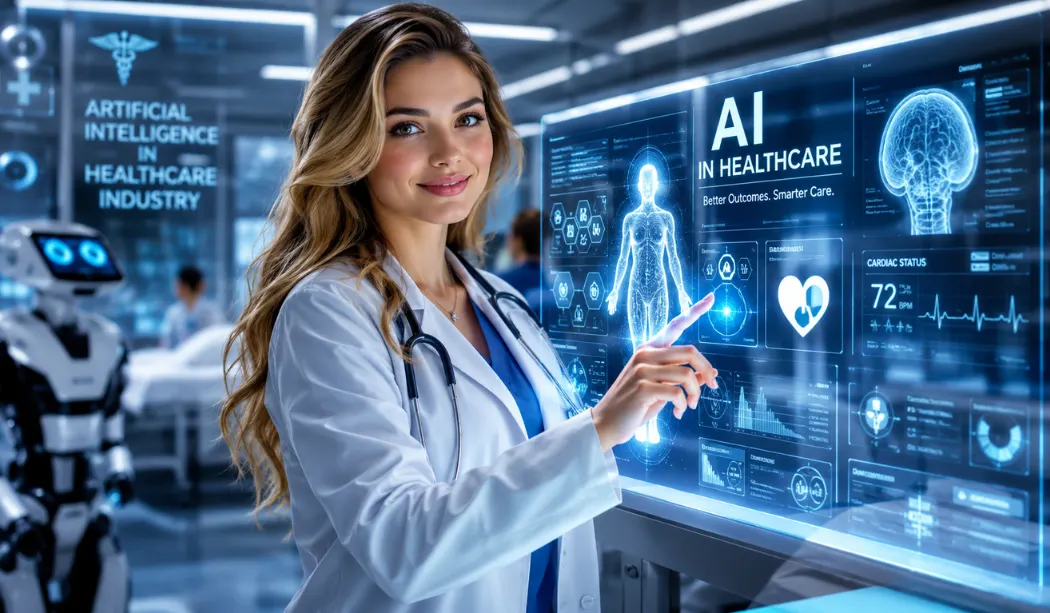
Intelligent technology is transforming the way we practice medicine in every nook and cranny. We take a review of most effective 10 Artificial Intelligence (AI) in healthcare industry instruments used in the present:
- The Early Cancer Early Cancer Detection Medical images can be scanned to detect tiny tumors in the early stages of development.
- Robot-Assisted Surgery The robotic arm is guided by a surgeon to execute highly precise procedures.
- Intelligent Virtual Assistants Chatbots which respond to health-related questions 24 hours a day.
- Fast Drug Development: Finding new chemical formulas for drugs in just a few months instead of years.
- Health Charts Predictive Predicting which patients may require emergency medical care in the near future.
- Electronic Medical Record Transforming doctor's conversations into text that can be typed instantaneously.
- Smart Wearable Alerts Wearables that monitor heartbeats, and alert users of potential danger.
- Chatbots for Mental Health: Helping you track your mood quickly for anxiety and stress.
- Crawlable Health Records Sorting out scans of unreadable documents into tidy digital folders.
- Supply Chain Tracking Making sure life-saving medicines don't run out of supply.
How Does AI Improve Hospital Management?
Hospitals are often busy and chaotic. The use of smart systems makes daily tasks easier for all affected. If you're interested in knowing what can AI help improve the management of hospitals?, the answer is found in the scheduling and planning.
AI is able to predict precisely how many patients are expected to walk through the door of a clinic on Tuesday morning. AI schedules the correct amount of doctors and nurses to work that particular shift. This reduces wait times in the emergency department and patients receive treatment more quickly.
Deploying AI-Powered Healthcare Solutions for Hospitals
Modern medical facilities are currently setting up AI-powered health solutions in hospitals to reduce their daily expenses. These solutions handle billings in conjunction with insurance as well as room assignments, automatically.
If a hospital is able to spend less time battling with paperwork, it is able to spend money for more advanced medical equipment and more clean infrastructure. The result is that an unpleasant hospital experience into a relaxed, organised visit.
AI in Healthcare Data Management: Sorting Vital Information
The hospitals are overflowing with documents as well as blood test results and insurance paperwork. Maintaining this clean and safe is an enormous task. Making use of AI for healthcare information management makes this job easier. Intelligent systems can automatically categorize the patient's files in a secure way. When patients visit an emergency department far away from their home, the nearby doctor will be able to check for allergy immediately. The clean and organized system will prevent harmful medication errors.
AI in Mental Health Diagnosis and Treatment: A New Era of Support
Medical treatment isn't just for the body. In the present, AI in mental diagnostics and treatments can provide amazing innovative resources to improve your emotional wellbeing.
Smartphone apps rely on the analysis of voice to identify symptoms of depression or intense anxiety. While apps cannot substitute for an actual therapist but it could provide calming exercises that can be performed in the late at night. It acts as a alarm system that prompts people to seek out professional assistance whenever they are in need of it.
Head-to-Head: AI vs Traditional Healthcare Systems
Traditional clinical techniques depend heavily on the use of memory and manual work. In comparing AI with traditional healthcare methods using the traditional method, it is slower, and has the risk of human fatigue.
Traditional systems are waiting for people to become sick before taking action. AI-driven systems make use of data to identify health issues before they happen. The shift in medicine is from a routine practice to one that is a and preventative protection.
AI vs Human Doctors Comparison: Partners, Not Rivals
It is a common concern how machines can take over medical professionals. When it comes to the AI against human doctor comparison human beings still prevail in empathy, kindness as well as complex process of decision-making.
Expert Industry Insights: > "AI will never replace doctors who are human. But, doctors using AI can replace doctors who don't." --- Global Medical Tech Review
Machines are adept at identifying small patterns of pixels in lung scans. Human doctors have a knack for comforting families who are scared. They form an invincible group.
AI-Powered Monitoring vs Manual Patient Monitoring
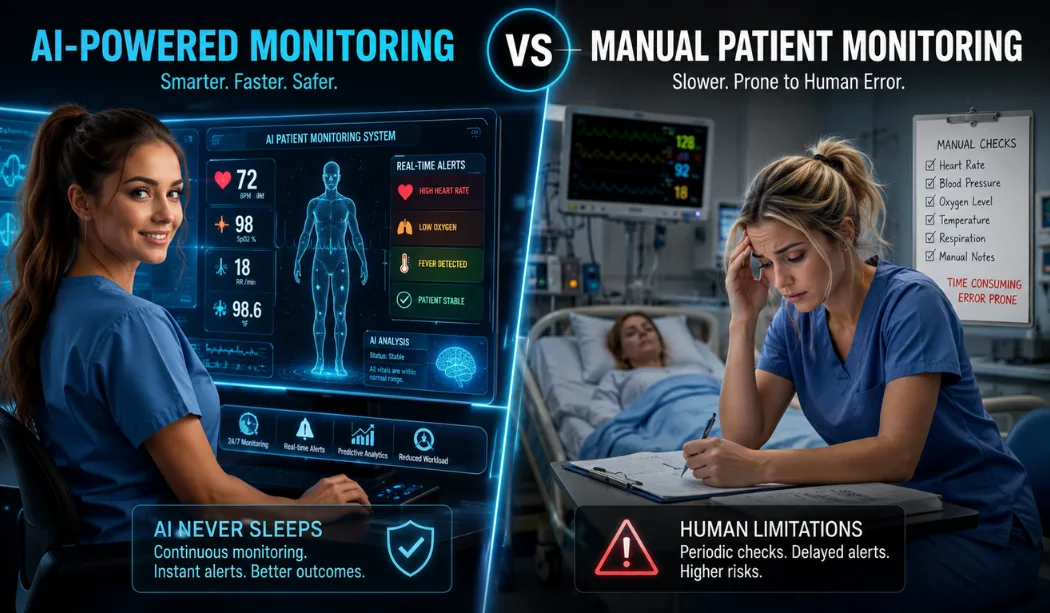
In a typical hospital bed nurses check the patient's vitals at least every hour. There are gaps in which the patient's health could deteriorate in a quiet manner. If you compare automated monitoring as opposed to the manual monitoring of patients Smart sensors monitor the heartbeat and oxygen levels every second. If anything goes wrong the system immediately sends an warning to the nurse's mobile. The immediate action helps save lives during crucial moments.
Read also: The Ultimate Guide to AI Driven Business Growth Strategies for 2026
Real-World Success: AI in Healthcare Case Studies and Examples
We will look at real-life instances where these tools have made an enormous change. These AI for health case studies as well as examples illustrate the power of AI in action. In a large eye clinic in the United States, an AI machine scanned images of eyes to look for the damage that is due to diabetes. The program detected visible signs of blindness within a matter of moments, which was long before patients could notice any changes in their vision. Due to this fast check thousands of patients received timely treatment, and they were able to keep their eyesight.
The True Benefits of Artificial Intelligence in Healthcare
The main goal of bringing technology in medicine is helping people. The primary advantages of artificial intelligence for health care come down to precision as well as speed and accessibility.
- More fewer diagnostic errors: Computers don't get tired or blurry following 12 hours of work.
- Lower Medical Costs Early detection of illness makes the treatment cost much less.
- Greater accessibility for remote Areas: Small country clinics are able to use AI to gain expert-level insight with no big city specialist present.
Frequently Asked Questions
Can AI diagnose diseases better than a human doctor?
AI recognize patterns within medical images quicker and often better than human beings. But, it isn't able to comprehend the complete individual patient. The human physician must examine the findings of AI in order to take the final call.
Is my personal health data safe with AI systems?
Yes, hospitals utilize highly secured, encrypted networks to operate the software. The strict privacy regulations ensure that your personal medical data is secure and safe from prying eyes of outsiders.
Will AI make going to the doctor more expensive?
Beginning it is difficult to set up the technology because it will cost money. In time, it will save hospitals a lot of money by preventing mistakes and accelerating the recovery process. The result is lower cost of medical care for families.
Final Thoughts: The Bright Future of Medicine
The world is just starting to discover what advanced technology is capable of doing for our bodies as well as our minds. Through blending humanity and digital technology hospitals are now healthier and more efficient than ever. The future of healthcare is exciting, rapid and driven by intelligent technological advancement.