




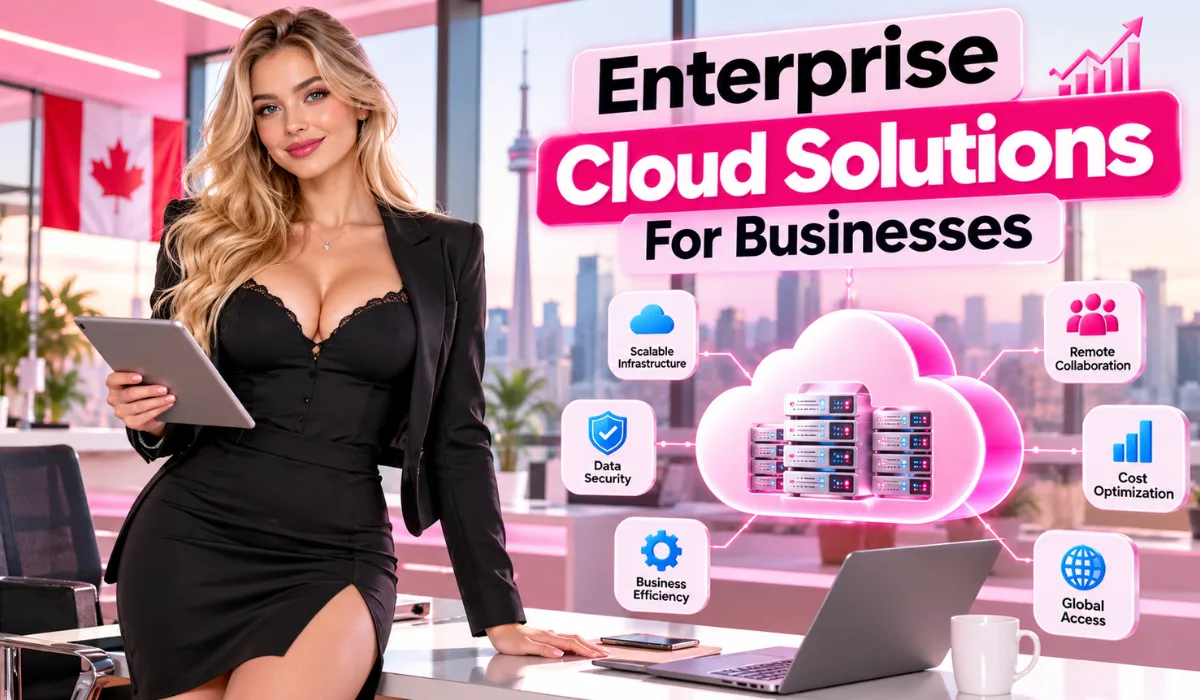
Welcome to the world of modern business technology! If you run a growing company, you already know that old computer servers inside office closets just do not cut it anymore. To grow fast, stay safe, and save money, companies rely on Enterprise Cloud Solutions For Businesses. These smart digital tools help organizations store data, run heavy programs, and connect teams from anywhere on Earth. Think of the cloud as a massive, super-powerful computer network that lives on the internet. Instead of buying expensive hardware that breaks down, companies rent space and power from big tech providers. In this guide, we will explore everything you need to know about scaling your digital operations, choosing the right services, and keeping your company safe. Let us dive right in and make cloud technology simple!
What Are The Best Enterprise Cloud Solutions For Businesses?
When looking for the best tools, you will find many choices on the market. Finding the right fit depends on your company size, budget, and daily goals. The top platforms usually offer high-speed storage, smart security guards, and tools that help workers collaborate. Here are a few major names and styles that dominate the market:
- Infrastructure as a Service (IaaS) for renting basic computer power.
- Platform as a Service (PaaS) for building and testing custom apps.
- Software as a Service (SaaS) for ready-to-use business tools like email and chat.
By picking the right mix, your team can work faster without worrying about server crashes or lost files.
Why Choose Enterprise Cloud Services For Businesses?
Switching to professional web tools changes how a company operates every single day. Old setups require constant physical repairs and manual updates. When you choose Enterprise Cloud Services For Businesses, you unlock ultimate flexibility. If your business suddenly gets twice as busy, the cloud expands automatically to handle the extra traffic.
Financial savings are another massive benefit. Instead of spending huge sums of money upfront on physical machines, you pay a predictable monthly fee. Plus, remote workers can log in securely from home, a coffee shop, or an airport. This keeps productivity high no matter where your team members happen to be sitting.
Read Also: Definition of an Enterprise System Explained Simply
Top 10 Enterprise Cloud Solutions For Businesses

Navigating dozens of tech options can feel overwhelming. To make your life easier, let us break down the leading systems used by top corporations worldwide.
Here are the key platforms and operational structures to watch:
- Amazon Web Services (AWS) for massive global scalability.
- Microsoft Azure for seamless office software integration.
- Google Cloud Platform for advanced data analytics.
- IBM Cloud for heavy corporate banking and security.
- Oracle Cloud for large database management.
- Hybrid frameworks combining private servers with public space.
- Industry-specific vertical clouds.
- Automated serverless computing networks.
- Edge computing frameworks for real-time data processing.
- AI-driven operational management platforms (AIOps).
How To Manage Enterprise Cloud Infrastructure
Running a massive digital network takes careful planning and daily attention. You cannot just set up a cloud account and walk away. To keep everything running smoothly, IT teams use specialized tools to monitor traffic, block threats, and control spending. Good management means knowing who has access to sensitive files at all times. It also involves setting up automated alerts so engineers know immediately if a system slows down. When you manage your digital setup well, your customers enjoy fast loading times and zero downtime.
Secure Enterprise Cloud Solutions For Businesses
Security is the number one worry for any business owner moving online. Cybersecurity threats change every single day, and data breaches cost companies millions of dollars. That is why deploying Secure Enterprise Cloud Solutions For Businesses is non-negotiable. These platforms use advanced encryption, which scrambles your data so hackers cannot read it even if they intercept it. Multi-factor authentication (MFA) adds an extra layer of protection by requiring workers to prove their identity through a phone code or fingerprint scan before logging in.
"Data security is not just an IT checkbox; it is the absolute foundation of customer trust and long-term business survival." — Dr. Aris Thorne, Enterprise Cloud Security Consultant
Enterprise Cloud Infrastructure Solutions

Your digital foundation needs to be as strong as a skyscraper's concrete base. Enterprise Cloud Infrastructure Solutions provide the raw power required to run complex corporate software. These solutions include virtual servers, high-speed data storage arrays, and private virtual networks. They allow system administrators to build custom environments tailored to exact company needs. When your infrastructure is solid, your developers can launch new website features and mobile apps in minutes rather than weeks.
Enterprise Cloud Strategy For Businesses
Moving to the internet without a solid game plan is a recipe for disaster. You need a clear roadmap before spending a single dollar on subscriptions. A smart Enterprise Cloud Strategy For Businesses defines which files move first, how much money you plan to spend, and who is in charge of daily maintenance.
I always advise leadership teams to start small. Move non-essential apps to the cloud first, test how they perform, and then migrate your core financial and customer databases once your team gains confidence.
Cloud Migration Solutions For Enterprises and Workload Management
Moving years of stored company data from an old office basement into modern web servers sounds scary. Thankfully, specialized tools make this transition smooth.
Cloud Migration Solutions For Enterprises
Professional migration toolkits analyze your current hard drives, pack up your files safely, and transport them across encrypted pipelines into your new digital home.
Enterprise Workload Migration Solutions
Not all computer tasks are created equal. Some programs need instant processing power, while others can run quietly in the background. Workload migration tools help you place each specific task in the most cost-effective and efficient server environment available.
Legacy Application Modernization With Cloud
Many established companies still run on outdated software programs built ten or twenty years ago. These "legacy" apps often crash and cannot connect to modern mobile tools. Legacy application modernization with cloud takes these old programs and rebuilds them for modern web environments. By updating old code, companies can breathe new life into vintage systems, making them faster, safer, and ready to interact with modern AI automation tools.
Cloud Adoption Strategy For Enterprises and Hybrid Frameworks
Adopting new tech requires changing company culture, not just buying software. Your staff needs proper training to feel comfortable using new digital workspaces.
Cloud Adoption Strategy For Enterprises
A successful adoption strategy focuses on clear communication. Show your employees how the new cloud tools make their daily jobs easier, and provide hands-on training workshops.
Hybrid Cloud Management For Enterprises
Most large companies do not put everything in one public cloud. Instead, they use a mix of private internal servers and public cloud space. Hybrid cloud management for enterprises lets IT staff control both environments through a single dashboard, balancing strict data privacy with unlimited public scalability.
Read Also: What Are Enterprise Technology Services: Benefits and Examples
Secure Hybrid Cloud Solutions and Multi-Cloud Strategy

Balancing multiple cloud providers helps companies avoid getting locked into a single vendor contract.
Secure Hybrid Cloud Solutions For Enterprises
These configurations protect sensitive customer records on private local servers while letting public cloud systems handle busy customer-facing web pages.
Multi-Cloud Strategy For Enterprises
Spreading workloads across different providers—such as using one company for storage and another for artificial intelligence processing—ensures your business never goes dark even if one major tech provider experiences an outage.
Public Private Hybrid Cloud Infrastructure
Understanding the mix of hosting environments helps business leaders make smart purchasing decisions.
- Public Cloud: Shared computing power owned by giant tech firms. It is cheap, fast, and scales instantly.
- Private Cloud: Dedicated server space built exclusively for your company. It offers maximum security and control.
- Public Private Hybrid Cloud Infrastructure: The ultimate combination of both worlds. It gives your business the agility of public scaling alongside the tight security of private data storage.
Conclusion
Embracing modern digital infrastructure is no longer optional for growing brands. By utilizing Enterprise Cloud Solutions For Businesses, you protect your data, empower remote teams, and prepare your organization for future growth. Take your time, plan your strategy carefully, and choose trusted partners who can guide your digital journey step by step.
Frequently Asked Questions
What are enterprise cloud solutions?
They are comprehensive digital services that provide large businesses with scalable data storage, computing power, and software tools hosted securely over the internet.
How much do enterprise cloud services cost?
Costs vary depending on your usage, data storage volume, and the specific mix of public or private servers you choose. Most services use a flexible pay-as-you-go model.
Is cloud data safe from hackers?
Yes. Top-tier providers use advanced data encryption, multi-factor authentication, and dedicated security teams to protect corporate files much better than standard office hardware can.