
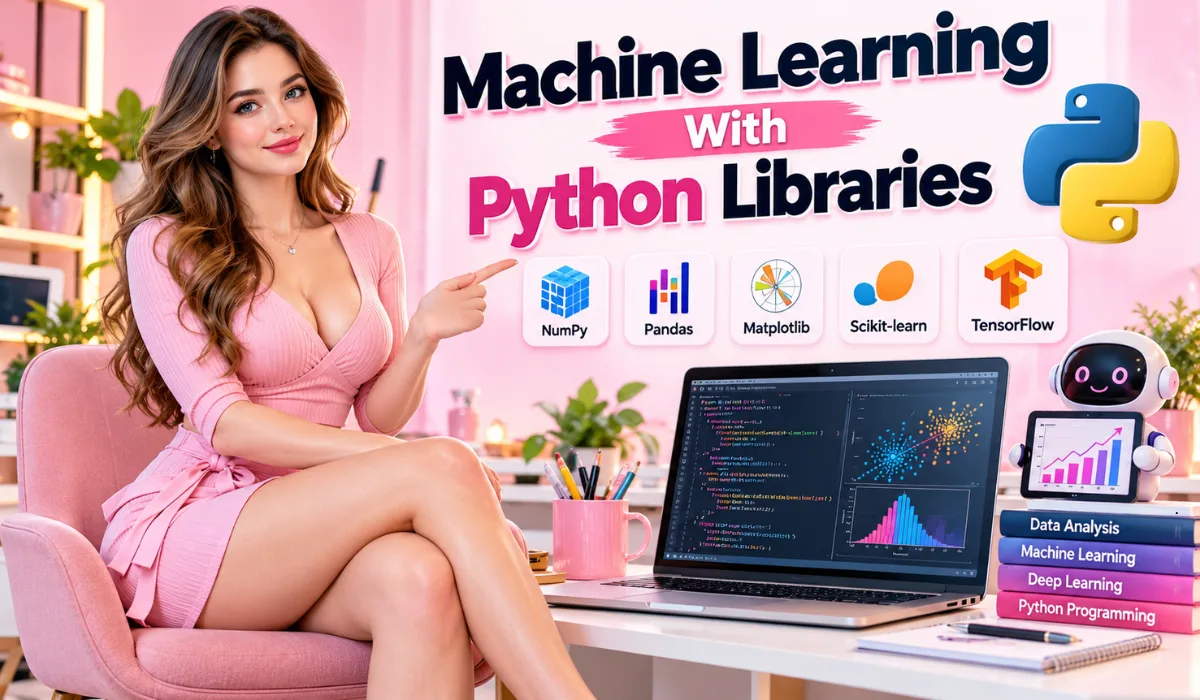
Computers are getting smarter every single day. They can recognize your voice, translate languages, and even drive cars. But how do computers learn to do all these cool things? The secret is Machine Learning With Python Libraries. Think of machine learning as teaching a computer how to learn from examples instead of writing strict rules. Python is a friendly computer language that is very easy to read, almost like English. When you add special toolboxes called libraries to Python, building smart apps becomes as easy as playing with building blocks. Whether you are a student, a curious beginner, or a tech lover, understanding Machine Learning With Python Libraries opens up a whole new world of creation. Let's dive in and explore how these tools work, why they matter, and how you can use them to build your own smart projects.
What are the best Python libraries for deep learning?
When people ask, "What are the best Python libraries for deep learning?", the answers usually point directly to TensorFlow and PyTorch. Both frameworks offer incredible power, flexibility, and massive community support. TensorFlow, created by Google, is famous for running smoothly on mobile phones, web browsers, and massive cloud servers. PyTorch, developed by Meta, is loved by researchers because it feels natural and easy to debug when something goes wrong.
TensorFlow machine learning framework for Python
The TensorFlow machine learning framework for Python is a powerhouse in the tech world. Big companies use TensorFlow to power search engines, recommendation systems, and image recognition tools. TensorFlow allows you to build multi-layer neural networks that can look at a photo of a cat and instantly tell you its breed, color, and mood. Even though the underlying math is complex, TensorFlow wraps it in clean Python commands that anyone can learn with a little practice.
Read Also: Machine Learning Lead Scoring Systems: Best Tools And Guide
Why are Python libraries important for machine learning?
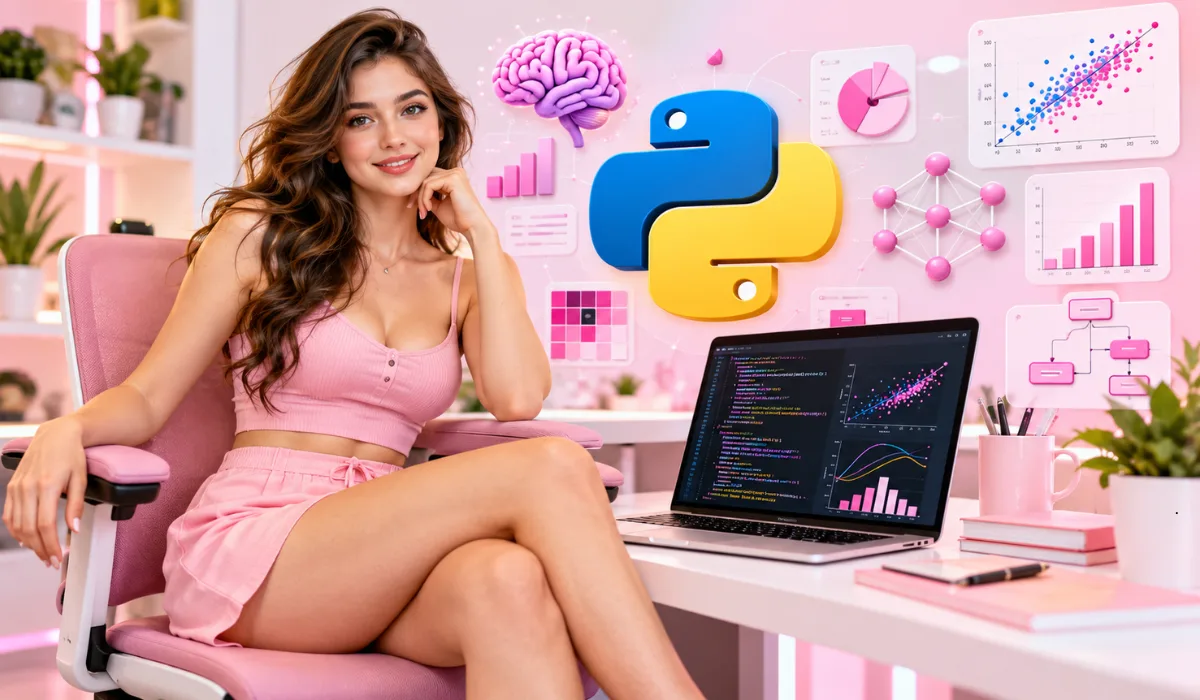
Why are Python libraries important for machine learning? This is the first question most beginners ask. Imagine building a bicycle from scratch. You would have to mine the metal, make the rubber tires, and shape the gears all by yourself. That takes a lot of time!
Python libraries are like a pre-built bicycle shop. They contain thousands of pre-written lines of code created by brilliant scientists and engineers. Instead of writing complex math formulas from scratch, you can borrow these ready-made tools.
Dr. Andrew Ng, a famous computer science professor and AI pioneer, often notes: "AI is the new electricity." Just like electricity powers our homes, libraries power modern AI development by making advanced technology accessible to everyone without needing a PhD in math.
Top 10 Machine Learning With Python Libraries
To master Machine Learning With Python Libraries, you need to know which tools belong in your toolbox. Different tools do different jobs, from organizing messy spreadsheets to drawing brain-like computer networks. Here is a quick look at the Top 10 Machine Learning With Python Libraries that every developer loves:
- Scikit-Learn: Perfect for classic machine learning and simple predictions.
- TensorFlow: Great for building deep brain-like networks.
- PyTorch: Popular with researchers for flexible deep learning.
- Pandas: Essential for cleaning and organizing data tables.
- NumPy: Handles super-fast math calculations with numbers and matrices.
- Matplotlib: Turns boring data into colorful charts and graphs.
- Seaborn: Makes data visualizations look sleek and beautiful.
- Keras: A friendly interface that makes TensorFlow easy to use.
- Hugging Face Transformers: The king of modern language and text AI.
- SpaCy: Lightning-fast tool for reading and understanding human words.
How do you use Python libraries for machine learning?
Learning how to write code can feel intimidating at first, but it gets simple once you practice. How do you use Python libraries for machine learning? The process usually follows a few clear, exciting steps.
First, you install the library using a simple command on your computer. Next, you import the library into your code workspace. Then, you feed data into the library, train a model to find patterns, and finally test your model with new questions.
Expert data scientist Rachel Thomas explains: "The best way to learn machine learning is by building small projects right away." You do not need to memorize every single math equation. You just need to know which library to call when you want to solve a specific problem.
Best Python libraries for machine learning projects
Choosing the right tool depends entirely on what you want to build. If you want to predict house prices based on size and location, you will look for the Best Python libraries for machine learning projects like Scikit-Learn. If you are building a chatbot that talks like a human, your project needs natural language tools. Matching the right tool to your goal saves hours of frustration and helps your programs run smoothly and quickly.
Read Also: Top 10 Machine Learning Training Techniques Explained Simply
Python libraries for machine learning and deep learning
Machine learning and deep learning sound similar, but they have key differences. Regular machine learning works well with structured tables of numbers. Deep learning mimics the human brain using artificial neural networks to handle complex tasks like recognizing faces or translating spoken audio.
Using Python libraries for machine learning and deep learning bridges the gap between simple calculations and mind-blowing artificial intelligence. Libraries like TensorFlow and PyTorch handle deep neural networks with ease.
Practical machine learning with Python libraries
Theory is great, but building real things is where the magic happens. Practical machine learning with Python libraries means taking messy real-world data—like weather reports, stock prices, or customer reviews—and turning it into useful insights. When you practice building real apps, you learn how to handle missing data, fix bugs, and make your models faster. This hands-on experience turns a beginner into a confident developer ready for the job market.
Pandas data manipulation for machine learning
Data is the fuel that powers artificial intelligence. But raw data is usually messy, incomplete, and full of errors. That is where data cleaning comes in. Pandas data manipulation for machine learning is the ultimate lifesaver. Pandas lets you load massive spreadsheets, filter out bad rows, fill in missing numbers, and organize everything into clean tables called DataFrames with just a few lines of code.
Python libraries for supervised machine learning
Supervised learning is like teaching a child with flashcards. You show the computer pictures of dogs and cats along with the correct labels until it learns to tell them apart on its own. Python libraries for supervised machine learning like Scikit-Learn provide ready-to-use algorithms for classification (sorting things into categories) and regression (predicting continuous numbers). These algorithms form the backbone of spam filters, credit card fraud detectors, and medical diagnostic tools.
Advanced Specializations: Forecasting and Big Data
As you grow more comfortable with code, you will want to tackle bigger and more complex challenges. Modern businesses rely heavily on advanced AI models to predict future trends and process mountains of information.
Python libraries for time series forecasting models
Predicting what will happen tomorrow is one of the most valuable skills in data science. Whether you want to predict next week's ice cream sales or tomorrow's stock market prices, time-based data requires special tools. Python libraries for time series forecasting models—such as Statsmodels and Prophet—help you analyze past trends, account for seasonal holidays, and generate accurate forecasts with remarkable precision.
Python machine learning libraries for big data analysis
Sometimes your dataset is too massive to fit on a normal laptop. When you deal with terabytes of information from global users, standard tools will freeze or crash. Python machine learning libraries for big data analysis like Dask and PySpark allow you to spread heavy computing tasks across multiple computers at the same time, making it possible to train massive AI models on gigantic datasets without breaking a sweat.
Read Also: Top 10 Machine Learning Lifecycle Stages: The Ultimate AI Guide
Natural Language Processing and Transformers
Language is one of the most complex human traits. Teaching computers to read, write, and understand human emotion has been a decades-long quest in computer science. Today, modern tools make natural language processing feel like science fiction come true.
Hugging Face Transformers for machine learning
The landscape of artificial intelligence changed forever with the introduction of transformer models. Hugging Face Transformers for machine learning gives developers instant access to state-of-the-art pre-trained models for translation, summarization, and question answering.
Instead of training a language model from scratch—which costs millions of dollars and takes weeks—you can download a pre-trained model from Hugging Face with a single command and fine-tune it for your specific project in minutes.
spaCy NLP tools for machine learning
For fast, efficient text processing in production environments, spaCy NLP tools for machine learning are an industry favorite. spaCy excels at tokenization, named entity recognition, and parsing syntactic trees. If you need to scan thousands of legal documents and instantly pull out names, dates, and legal terms, spaCy gets the job done with incredible speed and accuracy.
Frequently Asked Questions
What is the easiest Python library for beginners to start with?
Scikit-Learn is widely considered the best starting point for beginners. It has a clean, consistent design, excellent documentation, and focuses on classic machine learning algorithms without overwhelming complexity.
Do I need advanced math skills to learn machine learning?
While a basic understanding of algebra, statistics, and calculus helps, you do not need a math degree to get started. Python libraries handle the heavy math calculations behind the scenes, allowing you to focus on logic and problem-solving.
Can I run machine learning models on a regular laptop?
Yes! For beginner projects, tutorials, and small datasets, your everyday laptop is more than enough. For massive deep learning models or big data analysis, cloud platforms like Google Colab provide free computing power.
How long does it take to learn machine learning with Python?
With consistent daily practice, you can grasp the fundamentals of Machine Learning With Python Libraries in about 3 to 6 months. Building hands-on projects accelerates your learning curve dramatically.