




Hey, potential investor! Have you ever gazed at a tiny acorn, and wondered how it would transform into an enormous oak tree? It's true that investing in startups is sort of similar. It's all about planting the seeds of money now and wishing it will grow into a giant plant of wealth in the future. I can remember the first time I was introduced to the startup world. It was like being in there was a secret society where only those with the most wealth were allowed. I was confused and a bit nervous, but also extremely thrilled.. I started wondering how I could invest in startups safely without losing my money. This morning, I'm going to serve as your friendly guide. I'll take you through the exciting, wild and often bumpy path of starting a business. The goal is to make it easy as well as enjoyable and easy to grasp. Take off your go-to explorer's hat and get ready to dive!
What is Startup Investing?
Before we dive in to "the "how," let's talk about the "what." Startup investing means buying a small piece of a new company early on, hoping it will become the next Uber or Google. So, what is startup investing? Think of it like handing a kid money for their lemonade stand to buy lemons, and cups. In return, the kid offers me a piece of paper which reads, "You own a tiny part of this stand." If the stand is a success and it is able to be seen all over the world, then my little piece of paper will be worth an enormous amount of cash.
Why Startups Need Investors Like You and Me
Perhaps you're wondering, Why startups need investors in the first place? Building rocket ships (or an empire of lemonade) takes the company money. Entrepreneurs require cash in order to:
- Develop their product.
- Hire smart people.
- Let the world know they exist (marketing).
Banks usually will say "No" to startups because they're high risk.
Read also: Venture Capital Startups: Growth and Investment Insights
How Can I Invest In Startups: A Step-by-Step Map
The big question is! At the time I began thinking I would need million dollars. What do you think? The times have changed.
The Best Way To Invest In Startups For Beginners
If you're new to this area, don't expect to make it to the level of millionaire. One of the "best way to invest in startups for beginners" is to use something called "Crowdfunding." Consider crowdfunding as the idea of a potluck meal. Instead of one person providing everything and everyone bringing a single dish. For startup investment instead of one wealthy person who pays $1,000,000, thousands of investors (like myself!) make $100 every day.
Here are the Top 4 Trusted Platforms that I personally recommend:
- Republic: Best for absolute beginners (minimum investment is low).
- StartEngine: Very popular in the USA with a wide variety of startups.
- Wefunder: Extremely user-friendly interface.
- SeedInvest: Great for finding highly vetted companies.
How Can I Invest In Startups Using Online Platforms?
It's really easy. It's like buying!
- Make an account Register to a website like Republic.
- Browse Browse through the listing of businesses. It's enjoyable!
- Read Read their information (we term this "Due Diligence").
- Investment click the button to send cash.
|
Platform Name |
Best For |
Minimum Investment |
|
Republic |
Beginners |
$50 |
|
Wefunder |
Ease of Use |
$100 |
|
StartEngine |
Variety of Startups |
Varies |
|
SeedInvest |
Vetted Deals |
Higher |
Is It Safe? Understanding Risks and Rewards
It is my responsibility to be transparent about this with you. The idea of investing in startups can be exciting however, it can also be terrifying. This isn't like placing cash in a piggybank.
Can Startups Be Profitable or Will I Lose Money?
It is possible to ask "Can startups be profitable"? Yes! Certain unicorns become unicorns (companies that are worth more than 1 billion dollars). If I'd invested in Uber or Airbnb in the early days, when they were small they would have been wealthy at the moment. However, here's the most frightening part: "startup investment success rate" is not high. In 10 startup companies:
- 5. It could fail totally (I am liable to lose my funds).
- 3 could make some profit.
- 1 or 2 could succeed massively.
The Safest Way To Invest In Startups
Then, what's most likely to be the "safest way to invest in startups"? The key is diversification. Imagine 10 eggs. If I place all of them in a basket, and then fall on the basket on the floor, my eggs will break. If I lay an egg in ten different baskets, I'm safer.
- Do not place all your cash into one business.
- Do put money into several firms.
The Startup Investment Process Step by Step
We'll break it down into small steps. It's how I handle it whenever I come across a great firm.
Step 1: Finding the Hidden Gems
I seek out companies who solve actual problems. "Impact investing startups" have become huge in the present. They are businesses that want to protect the environment or treat diseases. It is also a pleasure "investing in AI startups" since robotics and intelligent computer systems are the future!
Step 2: Doing My Homework (Due Diligence)
- Who is in charge? (The Founder).
- Do you think the product is good?
- "What makes a startup attractive to investors"? Most of the time, it's an excellent team, and an enormous market.
Step 3: Understanding the Rules
It is important to understand I need to know the "compliance rules for startup investors". There are countries where there are limitations in the amount I can invest, based on the amount of the money I make. This protects myself from losing the entire amount.
Step 4: Making the Investment
I then transfer the money. Now, I own a "share" or "equity."
Step 5: The Waiting Game
The hardest part is. "When do startups give returns"? This takes duration. It usually takes 5-10 years! You have to take your time. I'm not able to just demand my money back in the next week.
Read also: How To Get Investors For Your Startup
Advanced Stuff: Money, Taxes, and Exits
We'll get started on important things, but I'll remain simple.
Tax Benefits of Investing in Startups
Did you know that the government can assist me? The government offers "tax benefits of investing in startups". In the UK there is EIS. In the US there is QSBS. If I decide to invest in a smaller company and keep it for an extended period and I am not required to pay enormous tax on the profits. This is like getting a reward to be courageous!
Startups vs Mutual Funds Investment
What's the difference from the Stock market?
-
"Startups vs mutual funds investment" mutual funds are similar to the slow and safe bus journey. Startups are similar to a rocket ship ride, fast, and shaky however they are able to go higher. Mutual funds are more secure and riskier, but could be rewarding.
How Do I Get My Money Back? (Exit Strategies)
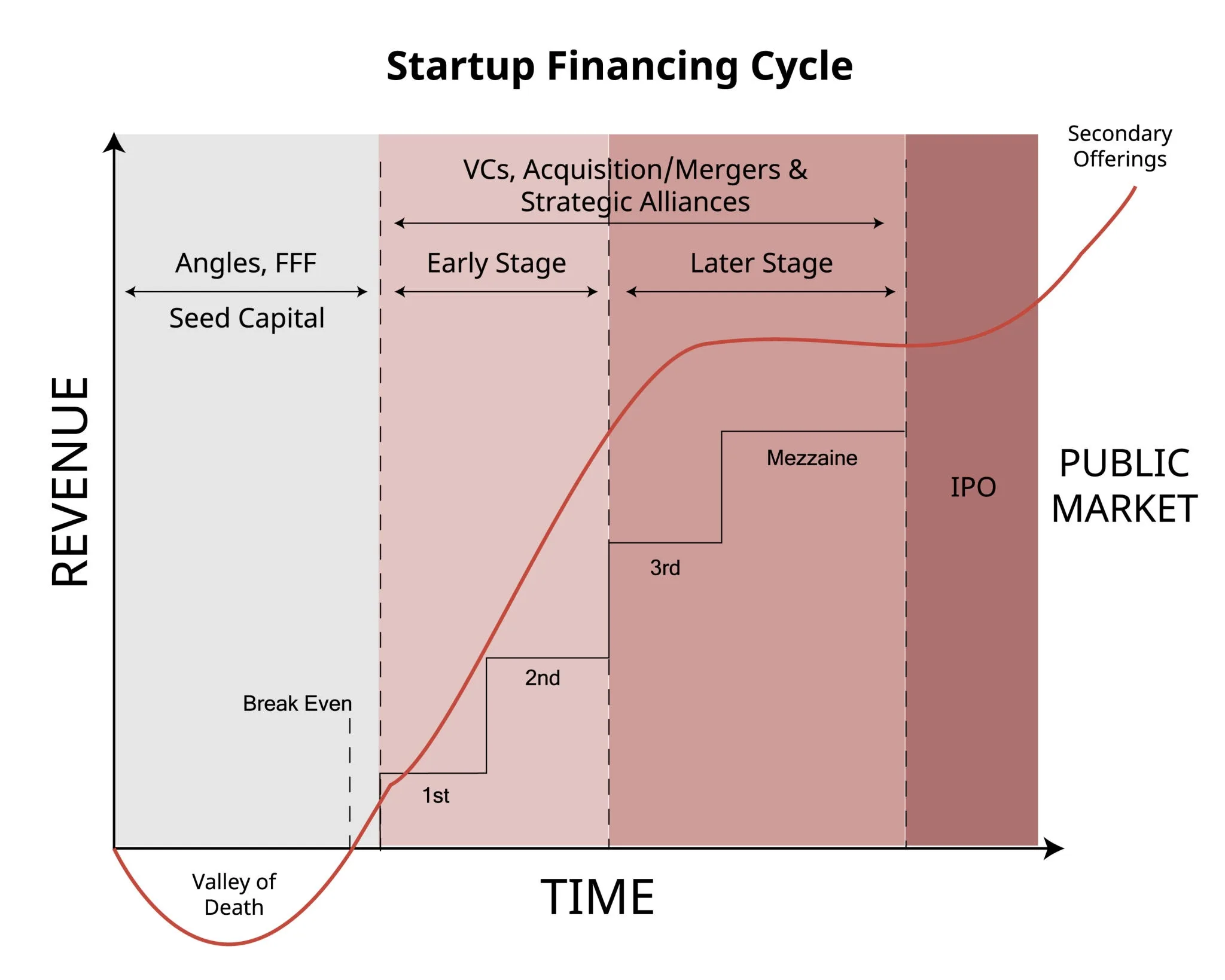
Only if the business has an "Exit." "Startup exit strategies explained" in simple terms:
- Acquisition An enormous corporation (like Google) buys the company. I'm the money!
- IIPO The company grows massive and is then listed on the market. You can also sell your shares.
- Insolvency: The company shuts down. I don't get anything. (Sad yet real).
Pro Tips: How To Reduce Risk In Startup Investing
I am not a fan of the idea of losing cash. That's why I studied "how to reduce risk in startup investing".
Early Stage vs Late Stage Startup Investment
- The early stage The idea of investing while the business is still an infant. Super risky, but super cheap.
- late stage Investments made when a company is just a teenager. More secure, however more costly.
- If I'm scared of the risk, I go for companies in later stages.
Watch the Burn Rate
Always check for the "startup burn rate analysis". This is a way of determining how fast is the company making money? If they're splurging in a frenzied manner, but not making some money, it could be a be in trouble!
Investing in SaaS Startups
I love "investing in SaaS startups" (Software as a Service). These are companies who sell Software subscriptions (like Netflix). The reason they are so popular is because their consumers pay monthly, making the company stable.
Expert Voices and Real Talk
To prove to you that I'm not faking it Let's take a examine what the experts are saying.
Expert Quotation: "The biggest risk is not taking risks. In a global environment that rapidly changes and constantly changing, the only way to ensure that your strategy will be unsuccessful is to not take chances. " -- Mark Zuckerberg (Founder of Facebook).
The quote is a reminder that although "private equity vs startup investment" discussion are often complex, the essence is as simple as backing the direction of the future.
My Personal Experience
The first time I asked "How Can I Invest In Startups," I deposited $100 in a company that made coffee. I was awed by their coffee. Each month I received notifications. It was amazing to announce, "I am an investor." The company continues to grow. Although I'm not making millions However, I've gained so much!
Read also: Startup Growth Metrics To Track
The Future of Startup Investing
The world is evolving. What is the "future of startup investing" appears to be good for everyday individuals just like us.
- AI and Technology: "Investing in AI startups" is the most popular trend.
- Applications: "Best platforms to invest in startups" make it simpler to manage this via a mobile phone.
- Global Access: Now I am able to invest in businesses around the globe.
Frequently Asked Questions (FAQs)
Below are a few questions that I receive often from friends.
Q1: How much money do I need to start?
A. It is possible to "start investing in startups" starting with $50 or $100 using platforms such as Republic and Wefunder.
Q2: Can I lose all my money?
A: Yes. Don't invest any money that you will require for food or rent. Make sure to put it into "fun money."
Q3: How long until I get rich?
A. This takes lengthy duration. Imagine 5 to 7 years. This is a marathon not a race.
Q4: What is the difference between an Angel Investor and a VC?
The answer is: The angel (like myself) invests money they own. An V.C. (Venture Capitalist) invests other investors' funds.
Conclusion: How Can I Invest In Startups
So, how can I invest in startups? The answer is simpler than ever before. You don't need to be a millionaire or wear a suit on Wall Street. With platforms like Republic and Wefunder, anyone can plant a seed with as little as $50. Remember the golden rules:
- Start Small: Only invest what you can afford to lose.
- Diversify: Don't put all your eggs in one basket.
- Be Patient: Real wealth takes time to grow (5-7 years).
The next Uber or Airbnb is out there, looking for investors like you. Are you ready to support the next big idea?