





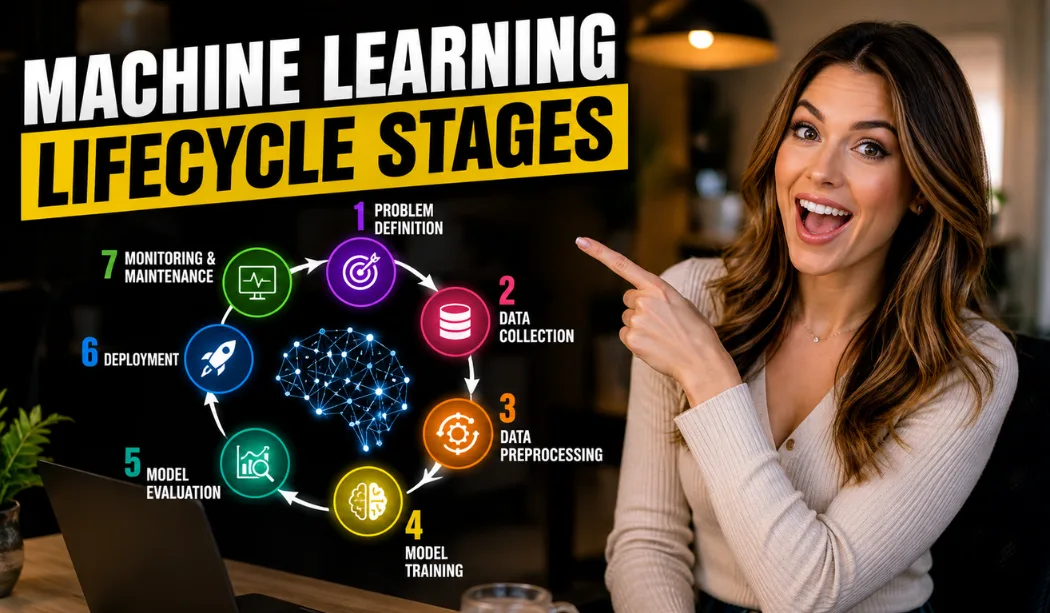
Making a computer program that is smart is a bit like baking a cake with multiple layers. There is no way to just dump ingredients in the oven and wait that it will turn out the way you want. There must be a clearly defined strategy, the proper ingredients, and a careful test. In the realm of tech the exact recipe step-by-step is known as the phases of machine learning lifecycle stages. No matter if you're planning to develop an autonomous car, or even an easy tool to predict weather conditions, it is essential to comply with these steps. Take a dive into the most comprehensive guidebook to understand the way that artificial intelligence in real life is created, developed, and controlled.
What is the Machine Learning Lifecycle?
The lifecycle provides a guideline to build AI models. The lifecycle covers all aspects starting from the initial idea until the model is running seamlessly within the actual world. Consider it an ongoing loop. When the program is released on the open, it is constantly growing and evolving based upon emerging data.
Traditional Analytics vs Machine Learning Lifecycle
The past was when regular data analysis was based on looking backward. The method used traditional analytical methods vs. the life cycle of machine learning methods for looking at the old sales charts and describe what transpired. Machine learning is a different process. It thinks in the future. It identifies hidden patterns within information to determine what's to come next.
Machine Learning Lifecycle vs Data Science Lifecycle
It is common for people to mix the two words. The lifecycle of machine learning vs. Data Science life cycle dispute is a simple. Data science covers a huge scope. It covers cleaning up of data, preparing charts and identifying the latest trends in business. Machine learning is an exclusive segment of the overall umbrella that is focused exclusively on the training of predictive models. Similar to that, the comparison of machines learning and AI lifecycle illustrates that AI encompasses broader robotics and logic systems. ML is focused on only the process of learning from information.
Read also: Understanding the Core Principles of Machine Learning Models
Top 10 Machine Learning Lifecycle Stages
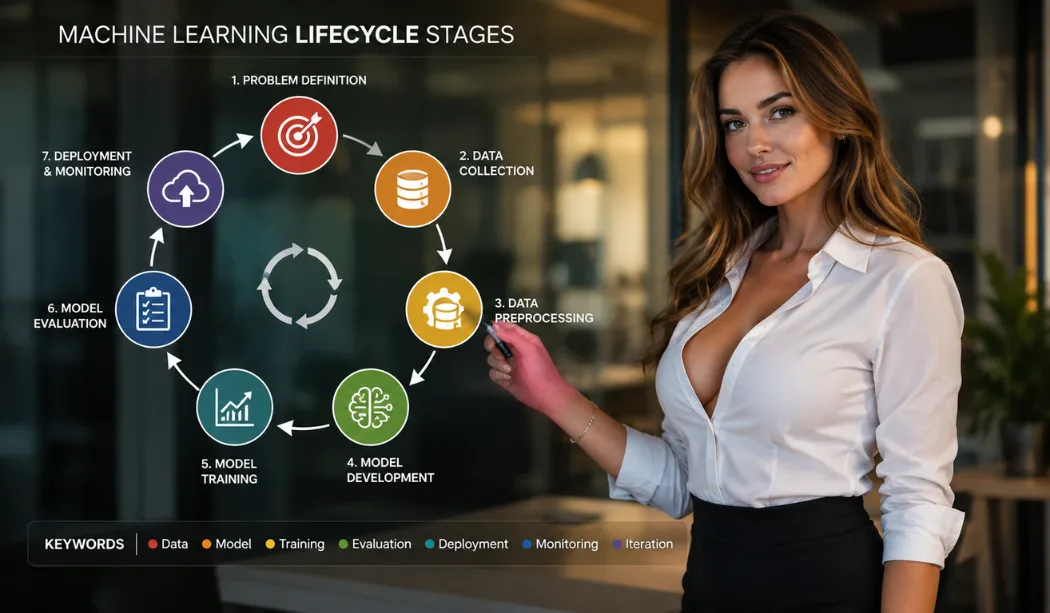
In order to build an effective method, you require the right strategy. Although some engineers speak about the seven steps to machine learning big-scale projects for corporations typically require a more thorough approach. Below are the most important 10 machine learning phases of the lifecycle that the top teams in tech employ in the present.
[Define Goal] [Collect Data] [Clean Data] [Explore Data]
[Deploy Model] <- [Test Model] <- [Train Model] <- [Select Model]
[Monitor & Maintain]
1. Defining the Business Goal
Before you write a one line of code it is essential to ask yourself "What is the problem I am seeking to address?" If you're a company looking to keep customers from abandoning it is obvious. It is necessary to have a system that can alert unhappy customers before they end their subscriptions.
2. Data Collection and Gathering
Data fuels AI. At this point, AI the engineers collect data, facts and pictures from a variety of sources like websites, databases as well as smart sensors.
3. Data Preparation and Cleaning
Raw data tends to be chaotic. There are inconsistencies, duplicate numbers and even mistakes. This is the reason the lifecycle management of machine learning tools can be useful to manage the mess.
4. Exploratory Data Analysis (EDA)
The process is similar to working on a case of detective. Scientists make use of graphs and charts to detect patterns, and to see how the various elements of data connect with the other.
5. Feature Engineering
That means you should select the most crucial elements of the design. If you're predicting home costs, bedroom size in a house is an ideal "feature" to add. What color is the door to your home? Maybe not.
6. Selecting the Right Model
There are a variety of AI brains. Certain are adept in numbers, while some excel at text or images. Engineers pick the right algorithm to accomplish the task.
7. Training the Machine Learning Model
The magic takes place. The algorithm analyzes the information over and over until it can recognize patterns that it has identified on it's own.
8. Evaluating the Model
What is its intelligence? We try it out with some issues it's not seen before in order to test its accuracy.
9. Deployment to the Real World
When the model is passed test, it is made live. It's embedded into mobile apps or website and users could begin using the model.
10. Monitoring and Updating
The reality of the world shifts rapidly. It is imperative to monitor the model continually to ensure that it is precise over time.
Read also: From Local Script to Live Web App: The Complete 2026 Guide to ML Deployment
Deep Dive: How is Data Prepared for Machine Learning?
It is impossible to feed raw and unclean data to the AI model. If you input poor data into the model the model, it will produce bad results. That being said, how is data properly prepared to be used in machines learning? * Removing duplicates: Deleting identical rows to make sure that the model doesn't become confused.
- Repairing Values Missing: Filling in blank areas with averages or clever predictions.
- Normalization The process of scaling all the numbers to make sure they're within the same band (like the range 0 to 1).
- Encoding Text Making words into numbers. computers are the only ones that truly comprehend math.
Testing and Deploying Your Model Safely

The process of building a model is one aspect of the challenge. Make sure that it functions in the open without breaking.
Why is Testing Important Before Deployment?
Imagine you launch an AI for medical diagnosis that detects ailments without testing it before. Any single error could cause harm. What is the importance of testing prior to deployment? It catches hidden issues, stops unfair bias and makes sure that the system can handle high volumes of volume of traffic without crashing.
An End-to-End Machine Learning Lifecycle Example
Let's look at a the life-cycle of machine learning by presenting an example of steps based on a realistic scenario of building an email filter that blocks spam.
- The goal is to stop spam reaching the inbox.
- Database: Gather 50,000 real emails that are marked "spam" as well as "safe."
- Coding: Using machine learning lifecycle stage python scripts. We scrub the text of any grammatical errors and eliminate punctuation.
- Instruction: The model learns the meaning of words such as "free money" typically are used to refer to spam.
- Implementation: The filter goes active in your email application and blocks junk mail at the moment of need.
Read also: Advanced Langchain Gemini Setup: Building Production-Grade AI Apps in 2026
Machine Learning Lifecycle Stages and Tools to Use
In order to build an all-inclusive machine learning phases process, specialists depend on specialist software.
| Lifecycle Stage | Popular Industry Tools |
|---|---|
| Data Gathering & Cleaning | Pandas, NumPy, Apache Spark |
| Model Training & Coding | Scikit-Learn, TensorFlow, PyTorch |
| Tracking & Management | MLflow, Weights & Biases |
| Deployment & Hosting | Docker, Kubernetes, AWS SageMaker |
Professional Opinion "The most common mistake youngsters make is that they focus 90% of their work time in the algorithms. The reality is that 80percent of their work involves making data ready and monitoring over the long term." -- Senior AI Infrastructure Architect
Frequently Asked Questions
What is the most important ML lifecycle stage?
Every step is important, but the preparation of data is usually believed to be to be the most crucial phase of the lifecycle for ML. If your data for training has been contaminated or ill-organized the entire model is likely to not work, no matter how sophisticated your algorithm may be.
What language is best for the machine learning lifecycle?
Python is the best choice in stage of lifecycle machine learning Python is a great choice for development due to its an extensive collection of no-cost libraries which make data cleansing and training models a breeze.
What is a machine learning lifecycle flowchart?
A machine learning flowchart is a diagram which shows the flow of data from being collected to training the deployment phase, and monitoring on a regular basis. It assists teams in tracking project development visually.
Wrapping Up the AI Journey
Learning the phases of the machine learning process requires patience and practice. With clear objectives and taking care to clean your data and continuously watching your live systems you can create reliable and strong AI devices that are able to solve human-related problems. Always experiment, continue testing your code, and have fun!